Friday, May 19, 2017

Best Way to Travel from boston preferred car service

Best Way to Travel from Boston preferred car service - When traveling around Boston on business, getting from Point A to point B will probably be a rather stressful transit unless you opt for a Boston preferred car service.

Whether you are going to a partnering company to make a presentation, meeting prospective buyers or attending a meeting being on time is essential if you want to showcase professionalism. However, being punctual is not the only matter that may come into play, you have to arrive at your destination looking calm, relaxed and ready for your meeting. Taking public transportation and having to walk to your destination or wasting time searching for a taxi may leave you frazzled and anxious which in turn will affect your performance negatively. At Master Livery our Boston preferred car service will transport you to your destination in comfort and style while allowing you to use the transition time constructively by going over last minute details or relaxing.

boston preferred car service


Transportation to and from the airport
At Master Livery you can arrange for one of our dependable and reliable drivers to meet you at the airport upon your arrival. With our Boston Corporate Car service, you will save time and stress by not having to search for transportation after you arrive.

Similarly, you can have a prospective client, partner or investor flying in be met at the airport, thus creating a lasting impression of professionalism, reliability and financial stability. For an even better first impression you can opt for one of Master Livery’s luxurious top-of-the-line limos.
Transportation to corporate events

Part of being a successful businessman is attending corporate events, may that be a fundraising Gala, an awards ceremony or a dinner meeting with clients. What better way to arrive than driven by a professional chauffeur. For these important events you can again opt for a luxury limo or a stylish town car. With our Boston preferred car service the only thing you will have to worry about is looking your best rather than worrying about traffic, taxis, parking and driving.

And also if you are visiting the Boston area and looking for transportation a great option is a Boston Black Car Service.

At Master Livery we provide you with the best Black Car service which ensures clean, safe and stress free transportation. Teamed up with professional drivers and with a large fleet to choose from we can have all your transportation needs met. Create a corporate account at Master Livery and have us organize all your transportation details from arriving in Boston till your departure.

Friday, May 5, 2017

The Museum of Fine Arts, Boston, has reached an agreement with the heirs of a Jewish collector

The agreement permits the group to hold the works—they went on the show there Wednesday, May 3—in exchange for an undisclosed sum paid to the estate, in step with a document within the Boston Globe.

The MFA is one of the only institutions in the united states that has proactively researched items in its collection, which can be doubtlessly intricate because of connections to Nazi-related thefts.

This unique case is “greater nuanced than many claims we pay attention approximately for Nazi-looted works of art,” said Victoria Reed, the MFA’s curator of provenance, in an interview with the Globe. Reed said it’s an “ethical duty of the cutting-edge possessor to redress those beyond injustices.”

The Museum of Fine Arts, Boston
In this example, scrutiny focused at the auction proceeds of the works, in place of the sole query of whether they were offered beneath duress, as has been the case with many other Nazi-loot claims. In a current case in Austria, I'm Kinsky public sale, house admitted that a work has been stolen with the aid of Nazis, however argued that it had due to the fact changed arms in “right faith” and changed into technically legal. The portray was withdrawn from the auction at the last minute amid outrage from round the arena.

The seven figures, all created in the famous comedy dell’arte fashion—a form of theatre that began in Italy within the 16th century—have been owned by using collector Emma Budge.

The budge’s heirs sold them as a part of a bigger estate sale following her demise in 1937 and the proceeds went to her estate account at M.M. Warburg Bank in Hamburg, Germany. However, the bank turned into later “aryanized” and sold to non Jewish proprietors. Some of her heirs fled the united states of America whilst others faced Nazi persecution.

Reed stated it seems unlikely that any of the heirs that made it out of the country ought to have accessed those budgets, and people who remained at the back of in Germany really couldn't access the account.

Reed delivered that it became difficult to gauge to what extent the estate had a desire in the way to cope with Budge’s series. “So really what we were looking at changed into what befell to the proceeds.” Reed said it was a case of “financial persecution this is not directly tied to racial persecution.”

Thursday, May 4, 2017

BOSTON’S ANTHONY “RIP” VALENTI WAY

Located in Boston’s West End is a small side street with a name that baffles many who are not deeply rooted into the Boston boxing scene—Anthony “Rip” Valenti Way. Anthony Valenti, or “Rip” to those who knew him, was a local boxing promoter for much of the 20th century. His offices were located on nearby Canal Street for years.

While Rip’s success may be questionable (he lost money on nearly every fight he promoted), he did manage to bring the only heavyweight championship bout to Boston in 1940. In this fight Joe Louis won via a TKO versus Al McCoy in Round 6. Rip’s story as a promoter did have a happy ending late in his life when he finally hit paydirt while promoting 22-closed-circuit locations for the Marvelous Marvin Haglar-Thomas Hearns fight in Las Vegas.  In one fail swoop Rip brought down a hefty $1.8 million from this single fight.

ANTHONY “RIP” VALENTI WAY


Walking along the Valenti Way, besides being nostalgic for boxing fans, also provides some great perspectives of antiquated building advertisements and murals. If you look up at the building on the corner of Canal Street and Valenti Way you will see a pair of these old building advertisements. One of these advertisements appears to be for a mirror company that references, a company named Whitney & Company. Right below this is another product or company concerning “Hairs” which apparently used to be located on Canal Street.

At the intersection of Friend Street and Valenti Way is a mural of the original Boston Garden, which local fans still hold dear to their hearts. You can read more about the original Boston Garden here.


  • Website: http://www.nytimes.com/1986/01/13/obituaries/anthony-valenti.html
  • Address: Valenti Way, Boston, MA
  • Cost: Free.

Wednesday, May 3, 2017

BOSTON’S PEMBERTON SQUARE

In the 1800s, a former hill used to occupy the current location of a curved building now known as 1-3 Center Plaza. This hill was referred to as Cotton or Pemberton Hill. Pemberton Hill was actually one of three hills which comprised the Tri-mount (a name which is recognized to this day on the nearby Tremont Street situated right outside of Center Plaza). It is said that the curve of this building actually follows the base of where Pemberton hill used to reside.

Pemberton Hill, once some seventy feet high, was gradually flattened for landfill usage in both Beacon Hill and Back Bay. In its place, around 1835, rose a series of London-esque brick row houses. Each of these homes was developed to look similar in style, with a narrow garden area in the center. These houses were occupied primarily by wealthy architects and lawyers.  By the end of the 19th century, however, many of these residences had begun to be replaced by businesses and in 1885 the once prominent houses and garden were razed to make way for the John Adams Courthouse. This courthouse (when ideally viewed at the top of the stairs to 1-3 Center Plaza) is best recognized as the site of numerous crazy cases during the TV series, Ally McBeal.

PEMBERTON SQUARE


Also located within the brick plaza space atop the stairwell is a series of circular brick bench spaces. Attached to these you may not a bronze plaque honoring former Massachusetts Governor John Endicott and Yale founder Elithu Yale. Both formerly resided in this area prior to the development of Pemberton Square. Governor Endicott was actually a five-time governor between 1629 and 1664 and one of the founders of the Massachusetts Bay Colony.


  • Website: http://en.wikipedia.org/wiki/Pemberton_Square_(Boston)
  • Address: 1-3 Center Plaza, Boston, MA (Address is approximate)
  • Cost: Free

BOSTON’S MASSACHUSETTS STATE HOUSE

This current incarnation of the Massachusetts State House (stop number two on the Boston Freedom Trail) was built in 1798 as a replacement for the Old State House located on Washington Street. It was built on land formerly owned by John Hancock’s uncle, Thomas Hancock.  His mansion stood on this site until the middle of the Civil War in 1863. A plaque recognizing the former Hancock is situated along the far west end of the fence in front of the State House.

The State House is the state capitol and home of the Massachusetts government and was once dubbed by Oliver Wendell Holmes as “The Hub of the Universe.” To Bostonians, it actually is, as the dome peak is from where all distances to Boston are measured.

MASSACHUSETTS STATE HOUSE


The structure was designed by famed architect Charles Bulfinch with the inspiration of London’s Somerset House. For his efforts, Bulfinch received a paltry commission of $1,400. Low commissions such as this and building failures such as in Boston’s South End led him to have financial troubles for which he spent a month in debtor’s prison The work of Charles may be seen through Boston’s Beacon Hill, however, he is probably best known for his design of the US Capitol in Washington D.C. His commission for this work was $2,500.

The cornerstone of the State House was laid by the fourth governor of Massachusetts, Samuel Adams, on July 4, 1795. Bulfinch’s design is in a brick Federal style with a 2-story portico and Corinthian pillars. Notable attributes of the Federal style include a high degree of symmetry amongst the left and right sides of the building. Marble wings were a later addition to Bulfinch’s original design in 1914 and 1917.

The large staircase in front of the building, while it appears to be the main entrance, is actually seldom used. These doors may only be used in one of two occasions:

  • When the President of the United States arrives (or a foreign chief of state visits)
  • When the Massachusetts Governor leaves offices on the final day of his term
  • The staircase was formerly used when regiments returned from their battle with flags, however, as this practice is no longer in effect (all flags go to Washington D.C. Now) it has not occurred since the Vietnam War.


Obviously the main attracting feature of the Massachusetts State House is the large golden dome atop it. The original dome was originally made of wood, but after it leaked Paul Revere covered it in copper in 1802. This copper dome was later upgraded to 23.5 carrot gold leaf in 1874. Each gold sheath is no thicker than a piece of paper.  The gold sheaths were most recently replaced in 1997 at a cost of more than $300,000. These sheaths would now be valued at over $1 million. The golden dome has maintained its color with one lone exception—during World War II it was painted black in case of an aerial attack.

While walking by the State House you may notice a handful of portrait statues in the yard. Unfortunately, since 9/11 these statues are no longer accessible to the public, however, these stats include:


  • General Joseph Hooker – This equestrian statue is actually located outside the main entrance (Hooker Entrance). The hooker was a Major General in the Union Army during the Civil War and is ironically best known for being defeated by Confederate General Robert E. Lee.
  • Anne Hutchinson (West Wing) – A statue by Cyrus E. Dallin who also created the famous equestrian statue of Paul Revere in Boston’s North End. Hutchinson was banished by the Puritans in 1638 for her differing religious views and push for religious freedom.
  • Mary Dyer (East Wing) – Mary was a Quaker who was also banished by the Puritans for her religious view. She was banished 3 times actually and eventually hung.
  • John F Kennedy (West Wing). An 8 foot 2 inch statue dedicated to the former president in 1990 on what would have been his 73rd birthday.


  • Website: http://www.sec.state.ma.us/trs/trsgen/genidx.htm
  • Address: 24 Beacon Street, Boston, MA
  • Cost: Free. Tours are offered 10am-4pm Mon-Fri and typically last 30-45 minutes. Note: This is one of the best tours in Boston and is highly recommended!

Tuesday, May 2, 2017

BOSTON’S MGH ETHER ROOM

The Ether Room is located within Massachusetts General Hospital (MGH) at 55 Fruit Street. It was the site of the first public use of ether as an anesthetic and now serves as a lecture room and museum. Access to Ether Room is free and usually open daily from 9am-5pm, however, it may be closed on occasion due to scheduled lectures. Having visited the site on multiple occasions, I have personally never had any issues getting in.
MGH ETHER ROOM

How do you access the Ether Room? What you’re going to want to do walks through the main entrance doors to MGH and follow the signs to the Bulfinch wing (marked with purple letters). You’ll basically go to the left of the front desk while walking straight and make a right just past Coffee Central. From there it should be well signed for you. The Ether Room is on the 4th floor so you will have to climb some steps to get there. Once you get to the Ether Room there will be a black telephone and a sign detailing the extension to dial to call security. When security picks up just kindly ask for permission to visit the Ether Room and they will be happy to buzz you in.

Upon entering the Ether Room one of the first things you will no doubt notice is that the acoustics in this room are fabulous. It’s like walking a house with all hardwood floors. The room, to describe it, is a ruined amphitheatre that is painted almost entirely in white with a green rotunda in the center of the room. In the front of the room is a lecture podium while the back has 6-levels of steel chairs situated on a steep incline. You will also notice a series of glass cases on both sides of the room.

From 1818 to 1868 the Ether Room was supposedly home to more than 8000 operations, which were performed in this room. Post 1868, the room was transformed into a storage area, dormitory, dining area and most recently a lecture room.

The event for which this room is most noted and actually named for (although no one is quite clear as to when the name officially came into effect), however, is the historic event which occurred here on October 16, 1846 at approximately 10:15am. It was on this day that ether was used as an anesthetic on a patient. The patient was a 20-year old printer and editor by the name of Edward Gilbert Abbott. Mr. Abbott had a tumor located just underneath his jaw. He was authorized via a sponge dipped in either by a local dentist, William Thomas Green Morton. The procedure was performed by local surgeon and 1st dean of Harvard Medical School, John Collins Warren. Onlookers sat in this very auditorium and watched in amazement as Dr. Warren painlessly cut into the patient. When inquired about the experience after his surgery, the patient Mr. Abbott, claimed he had experienced no pain and only felt the sensation of a blunt object touching his skin. After checking on his patient, Dr. Warren then turned towards his audience to declare his success by stating, “Gentlemen, this is no humbug.”

Directly behind the podium you will see a painting which commemorates this surgery. Now what is interesting regarding this 107’ painting is that it is a recent addition. In January of 2000, twenty physicians from MGH actually donned costumes from the mid-1800s and recreated the scene from the famous surgery. Two hired artists, Warren and Lucia Prosperi, then took numerous photos of the actor surgeons so as to create the painting.

Just to the left of the painting and podium you will notice an Egyptian mummy. This is MGH’s friend, Padihershef, otherwise often referred to just as paid.  The pad was one of the 1st mummies brought to the US. He was a gift from a Dutch merchant and officially arrived in Boston in 1823. Less than 1 month after his arrival to MGH Padihershef began a one-year tour of the US where visitors paid almost 25 cents, a sizeable sum in the early 1800s, to view the mummy. Per MGH officials, his tour helped raise almost $1 million for the hospital.

Little is known about Padi although scientists have been able to discern some facts about him via the hieroglyphs and inscriptions on the inside and outside of the sarcophagus. From these they were able to determine that Padihershef (who was named after the Egyptian god, Hershef, the god of water and fertility) was an unwed stone-cutter who died in his 40s. He was from the city of Thebes, and it is likely his tomb only survived because he was a commoner and not of royalty, thus grave robbers would have not attempted to loot his tomb knowing no valuables may exist inside.

Padi’s neighbor to his right is a marble statue of the god Apollo. This statue was actually created in the Louvre in Paris and a gift in 1845 from Massachusetts congressman, Edward Everett. Edward, was of course, best known for being the keynote speaker on the eve of Abraham Lincoln’s infamous Gettysburg Address. Edward’s 2 hour speech has fallen into anonymity versus the two minute speech delivered by President Lincoln.

Lastly, if you wish to get the “complete” Ether Room experience there are, of course, 2 glass cases on either side of the room. Within each of these cases are some examples of old surgical equipment if you’re so inclined as to view.

A tributary statue celebrating the first use of ether may be visited in the Boston Public Garden. To read more about this monument you may read here.


  • Website: http://www.massgeneral.org/history/exhibits/etherdome/
  • Address: 55 Fruit Street, Bulfinch Building, 4th Floor, Boston, MA
  • Cost: Free

Tuesday, April 25, 2017

Boston’s New England Aquarium

The New England Aquarium opened at its present locale in 1969 after a series of prior locations/failures (four in all). It originated as the Boston Aquarial Gardens in 1859 over on Bromfield Street near the Old South Meeting House.  When it opened visitors were welcome with a 25 cent admission fee. In 1912 it relocated to South Boston into a structure said to resemble a church or a museum where admission was dropped to the low, low price of free.

However, this proved a financial disaster and the site began a slow descent into hardship. Not only was the museum empty, but so were ½ of the existing tanks! In September of 1954 officials decided to close the South Boston Aquarium… and build a tennis court. Finally, in 1969 as part of a revitalization effort of which the city reportedly poured tens of billions of dollars into sprucing up this former parking lot, the latest incarnation of the New England Aquarium opened.

This current building blend a mixture of concrete, glass and metal and houses a 4-story (23 foot deep) 200,000 gallon glass tank. The entire aquarium is built around this tank of which a spiral staircase leads visitors up and around the tank to observe the 7000+ varieties of aquatic species. At the top of the open tank, visitors are entertained with educational sessions as employees of the aquarium dive right in to share their wealth of knowledge.

New England Aquarium
Outside of the front entrance (just to the left actually) is perhaps one of the best bargains in all of Boston… the free harbor seal attraction. Harbor seals are native to the Atlantic Ocean and may be found within Boston Harbor. Outside of these tanks, children and adults alike can enjoy the playful innocence of these creatures as they entertain all who pass by.  If your children begin to worry about the seals sitting under water for extended periods of time, tell them not to worry as the seals can hold their breath for up to 20 minutes.

A few years back, actually around the time of the release of the movie, “March of the Penguins,” tales began to be spread about the theft of a penguin from the New England Aquarium. This penguin was reportedly stolen by a little boy who managed to smuggle the creature out of the aquarium via his backpack. Rest assured, however, all creatures are accounted and the story proved to be just a wide-spread hoax. Per officials from the Aquarium, these tales tend to blossom every so often (ironically in a very similar format) and tend to occur most commonly around the occurrence of high profile events around popular sea creatures.


  • Website: http://www.neaq.org
  • Address: 1 Central Wharf, Boston, MA
  • Cost: Adults $22.95; Seniors (60+) $20.95; Children (Ages 3-11) $15.95

Boston’s Crimes-Haunts The Ponzi Scheme

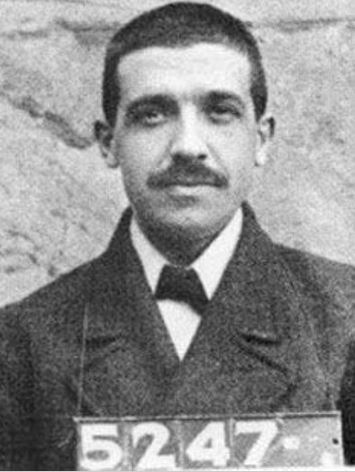
Situated along Boston’s Hanover Street in the early 20th century was the former site of the Security Exchanged Company. This company, much different to the similarly named Securities and Exchange Commission, was the business under which Charles A. Ponzi operated one of the largest money schemes in the history of the United States.

Charles Ponzi emigrated to the US from Italy in 1903 with only $2.50 to his name but with the conviction to build an empire.  Shortly after being fired for stealing from a restaurant where he was working he noticed an apparent loophole or opportunity to actually profit via the acquisition of Postal Reply Coupons.

Postal Reply Coupons, or International Reply Coupons if you are unfamiliar, allow an individual to purchase postage in their resident country and then exchange it for equitable postage in another country. Due to factors such as inflation and exchange rates, one could profit by as much as 400% of the exchange of such coupons, albeit in small individual sums.

Charles Ponzi
Charles Ponzi
Built upon the principal of taking advantage of this not totally illegal concept, Ponzi created the Security Exchanged Company on Hanover Street in 1919. When he first opened for business and promised to pay investors a 50% return on their investment in just 45 days, many balked. However, true to his word, he delivered on such promises to early customers and investors from all over the city began to line up to graciously hand over their cash.

Money began to pour in so quickly that it was stacked up in Ponzi’s office before being deposited daily in massive sums at the nearby Hanover Trust Bank of Boston (also located on Hanover Street). Concerned over appearances on depositing such continual large sums, Ponzi actually acquired a controlling interest in the bank to ensure no questions over the funds arose.

Questions did arise though, in 1920 when a Boston writer explored how Ponzi’s return was economically improbable due to the short investment period. Ponzi immediately retaliated on the author and sued him for libel for which he actually won a $500,000 settlement. This, however, did not fully deter skeptics. In a July article in the Boston Post, Clarence Barron (the founder of modern financial journalism) made two notable observations. The first point Barron inquired about was, if Mr. Ponzi’s scheme is so fantastic and fool proof, then why was it that he himself not an active participant with his own funds? Secondly, and more damning, was the point that based upon known investments, 160 million postal reply coupons would be required to be in circulation. Per the United States Postal Service, however, only 27,000 coupons were in circulation.

Rather quickly things began to unravel for Charles and by August of 1920 he was arrested on mail fraud charges. Ponzi was exposed for never having invested in postal reply coupons. He had simply taken the funds from later investors to pay off earlier investors. Robbing Peter to pay Paul as the saying goes. Ponzi’s once vast  $7 million businesses had collapsed almost overnight into $4.5 million in debt and all his outstanding investors were left with a return of only $.30 on the dollar.

For their efforts, the Post won a Pulitzer Prize in 1921.  And, Charles, well he spent most of the next 14 years in jail before eventually being deported back to Italy. The scheme he made famous, however, continued to live on most recently via Bernie Madoff in 2009. Despite the fact that the Ponzi scheme is named after himself, Charles did not actually come up with the scheme. It’s unknown who was the first to actually come up with and use the investment scam, however, the concept was noted back as early as 1857 in Charles Dickens’ novel, Little Dorrit.


Saturday, April 22, 2017

Boston’s Paul Revere Mall

The Paul Revere Mall, known just as The Prado by locals, was developed in 1933. In the midst of this mall is a large fountain. Attached to a brick wall along the south side of the park is a series of about a dozen bronze plaques. Each plaque honors respected North End locals from the past. In addition, there are plaques which commemorate Paul Revere and William Dawes, and a larger relief which depicts a map of the area as it would have appeared 1646.

The centerpiece of the Paul Revere Mall though, is obviously the large equestrian statue of Paul Revere. The piece sculpted by Cyrus Edwin Dallin who was commissioned to do the statue when he was only 22 years old. Maybe it was his youth, inexperience, or maybe Cyrus has been just a perfectionist because it took him some sixteen years to finalize the sculpture. Reportedly four to seven versions actually precede the version currently situated in front of you now. The statue, however, was finally unveiled in September of 1940.

Paul Revere Mall
Paul Revere Mall
The sculpture itself depicts Revere astride his horse, supposedly, en route during his famous Midnight Ride. Revere is shown in his colonial tricorne hat and coat with his right arm hanging out as if waving or gesturing. Interestingly enough the depiction of Revere also shows him as a tall, slender gentleman when in actuality he was of medium height and a bit stocky.

If you explore the area a bit further, there is a historical marker that is located under a green awning on Hanover Street (on the SE corner of the park). Attached to the building about eye height is a sign which speaks to the various Festas which occur in the North End area throughout the summer season.


  • Website: http://www.hmdb.org/marker.asp?marker=19275
  • Address: Intersection of Hanover Street and Clark Street, Boston, MA
  • Cost: Free

Three pieces of art in Boston’s Post Office Square

Post Office Square, which is home to some 100+ varieties of trees and flower, is also sometimes referred to as the Norman B. Leventhal Park after a former building development within the area. This area was formerly where many manufacturers of rope for ships and such resided in the 1700s. After a fire wiped out those factories, the area was residing for a period of time featuring large stately homes. Unfortunately, a “second” fire (Great Fire of 1872) wiped out these homes and the area underwent a further revitalization. The surrounding streets were all widened and the space left was this small triangular traffic island outside of the former Post Office (now the site of the John W. McCormack Court House). The park was formally opened to the public in 1874.

The park today is 1.7 acres of lush green space that is often frequented by local business men and women during lunch time. To encourage such behavior the city, even provides cushions for free use within the park for each of its visitors to lounge on the grass without soiling their formal attire. Ironically, despite a reluctance to offer this service for fear of the cushions “growing legs,” the city claims that not a single cushion has been stolen to date.

A further piece of irony surrounding this park is that hidden beneath all of this serenity is that a parking garage resides directly underneath. This has lent itself to the park’s slogan, “Park above, park below.”

Post Office Square is probably best recognized for its long garden trellis which flows through the center area of the park. This 143’ long trellis, which is covered with 7 species of vines, cover a narrow walking path which visitors may follow from one end of the park to the other.
The Square is also home to a handful of wonderful pieces of public art including.

You may learn more about each of these pieces of art below:

Angell Memorial Fountain

The Angell Memorial Fountain is located in a smaller partitioned section of the park near the intersection of Milk Street and Pearl Street (on the north side of Milk Street).

Immanent Circumstance

Angell Memorial Fountain

What you’ll see at the Angell Memorial Fountain: This fountain was given in honor of the founder of the Massachusetts Society for the Prevention of Cruelty to Animals, George Thorndike Angell.  The name of this fountain is confirmed by the large letters atop the obelisk-like structure specifying, “In memory of George Thorndike Angell 1823 – 1909.” Atop this large pillar is a brass angel; while at its base are a series of lion heads from which the fountain is replenished via their mouths. When this fountain was originally introduced in 1912 it was used as a watering hole for horses.

Creature Pond

Creature Pond is located in a smaller partitioned section of the park near the intersection of Milk Street and Pearl Street (on the north side of Milk Street).

Creature Pond
Creature Pond 
What you’ll see at the Creature Pond: This bronze pond sculpture was a 1982 addition to the park and is covered with a multitude of creatures… hence giving it its clever name, Creature Pond. It is actually the work of not one, but nine different artists, each of whom added their own selection of flora and fauna. Gazing upon the structure you may not such animals as frogs, ducks, birds and lily pads all floating atop a pond of bronze.


Immanent Circumstance 

The fountain actually consists of two pieces. The large fountain piece is located near the NE corner of the park near the intersection of Pearl Street and Milk Street. The smaller urn fountain may be viewed near the southern end of the park (near Franklin Street).

Immanent Circumstance
What you’ll see at the Immanent Circumstance: Immanent Circumstance consists of two fountains and was sculptured by Rhode Island artist Howard Ben Tre. The large fountain is complemented by a smaller urn-like fountain, each of which is located at opposite ends of the park. The more recognized larger fountain consists of five pillars topped with a circular glass frame. From the upper frame, water emits into an arch where it disposes of a single stream of water within the pillars


  • Website: http://www.normanbleventhalpark.org/history.html
  • Address: Post Office Square, Boston, MA (Approximate intersection of Milk Street and Pearl Street)
  • Cost: Free